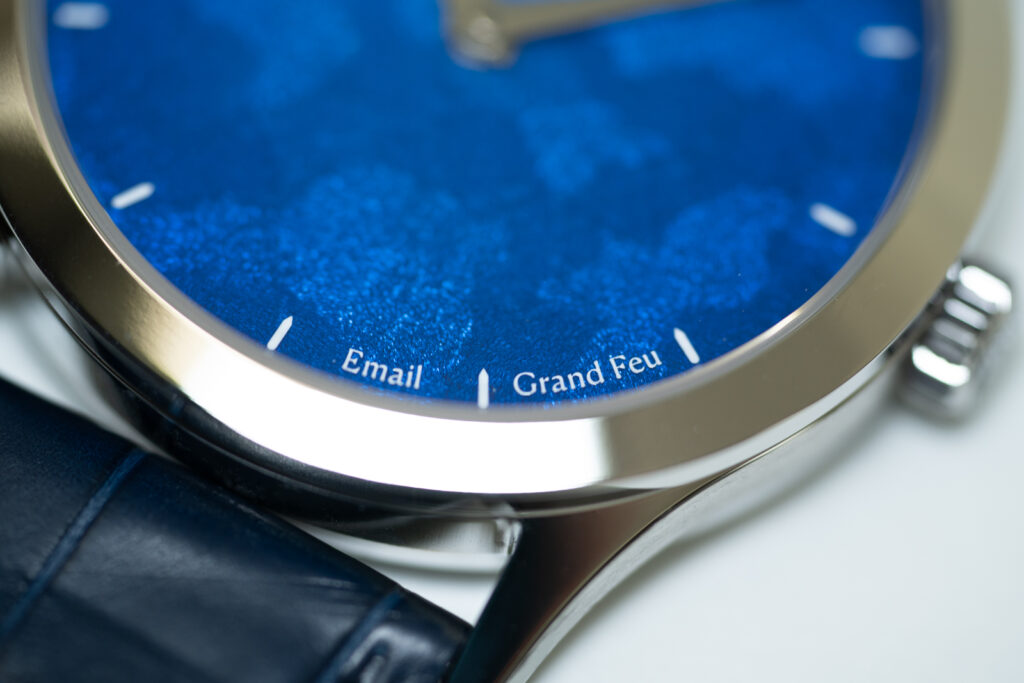
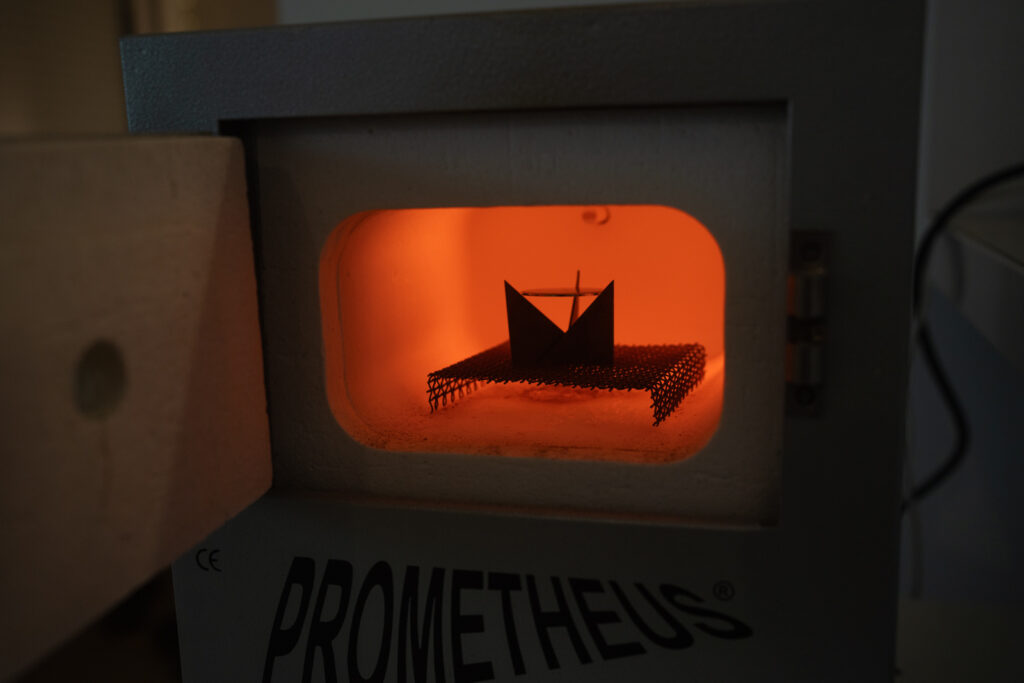
Enamel is glass ground into powder, applied to metal and then fired in a kiln. The term “Grand Feu” refers to this high-temperature firing, generally around 800 °C depending on the enamels used. Under the heat, the grains fuse into a vitreous layer that adheres to the base. As it cools, it solidifies, revealing its colour and lustre.
As early as the 17th century, enamellers in Blois and Paris decorated watch cases and dials with miniature painted scenes, bringing together timekeeping and the arts of fire.
From glass to colour
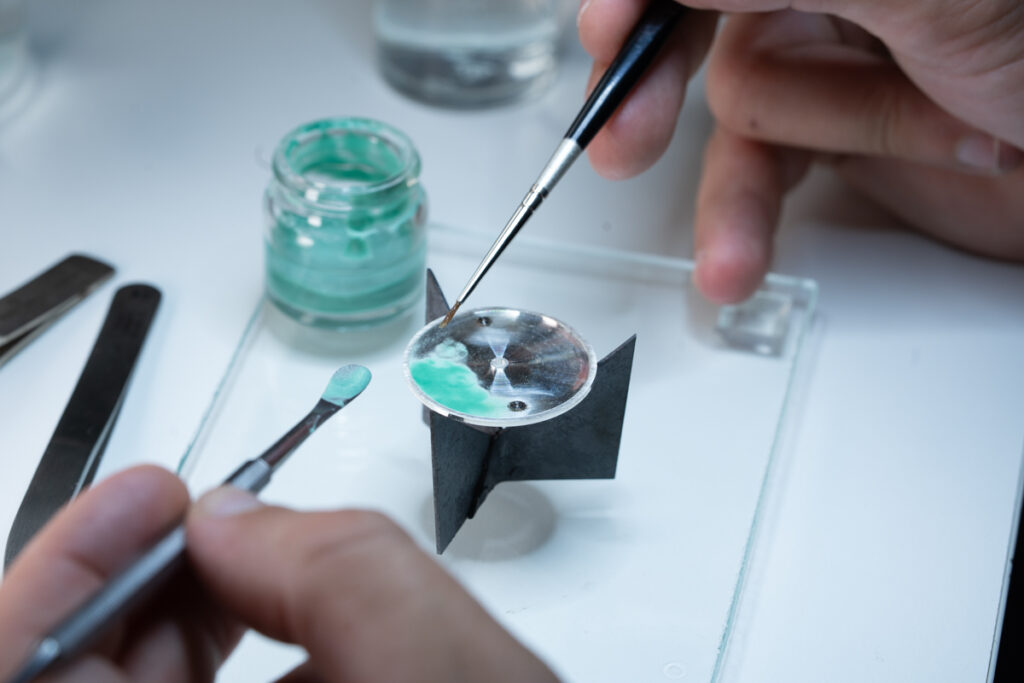
Enamel is a glass made from mineral materials and metal oxides that give it its colour. Depending on its formulation, it may be opaque or transparent, covering the metal or revealing the details engraved on its surface. Before application, the enamel is ground into fine grains, then carefully washed several times. The powder is kept moist to form a mixture that the enameller can pick up and apply with a brush. This step allows the grains to be distributed precisely over the prepared metal base. The water is used only for application and must evaporate before firing. In the kiln, the grains fuse to form a continuous vitreous surface. The powder then takes on the appearance of the enamel seen on the dial, with its colour, transparency and lustre.
The trial by fire
In the kiln, the enamel grains fuse to form a continuous layer bonded to the metal. For Ukiyo dials, 5 layers are needed to achieve the right colour intensity, giving a thickness of 0.35 mm on both the front and the back.
This requires great precision. With each firing, a small difference in enamel density between the two sides causes distortion, and the process must begin again.
Cooling reveals the result, allowing the colour, surface and quality of the firing to be assessed.
The metal beneath the colour
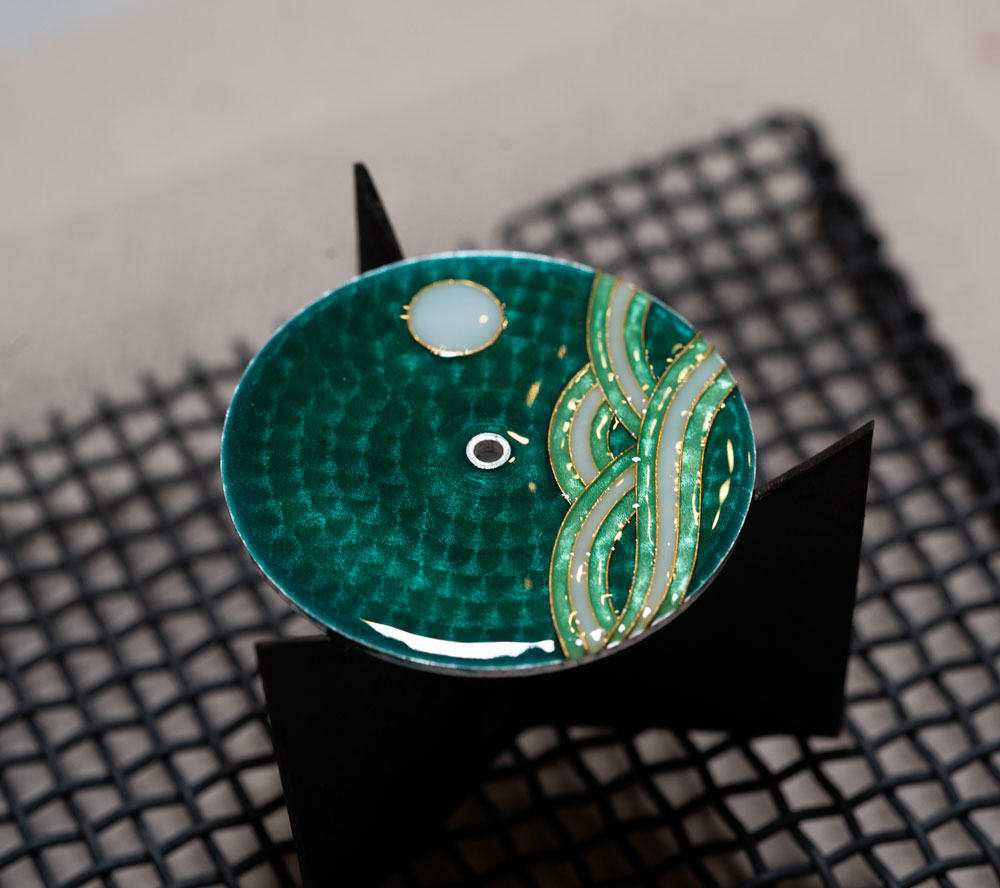
With transparent enamel, the base plays a full part in the appearance of the dial. Light passes through the coloured layer and is reflected by the metal.
Decorative finishes, such as the “perlage” shown here, therefore produce different shades depending on the lighting and the angle of the watch.