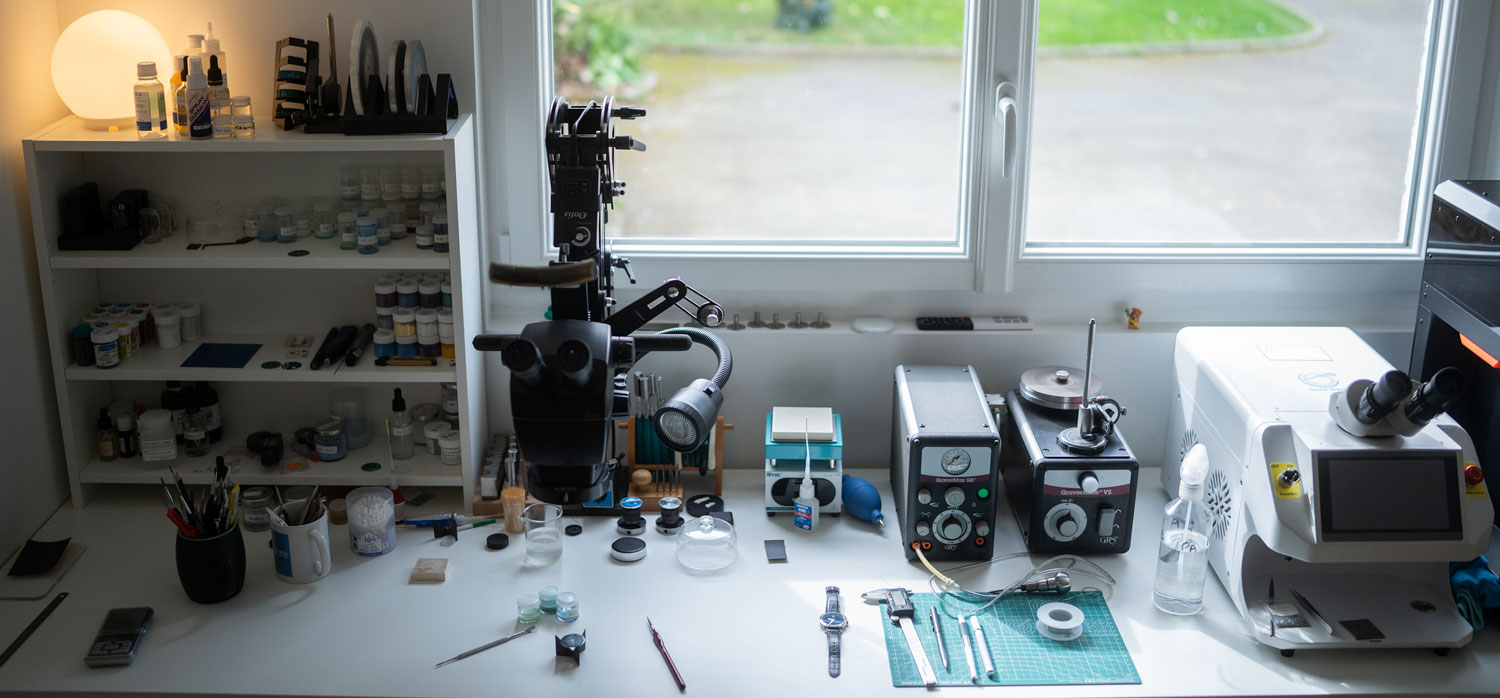
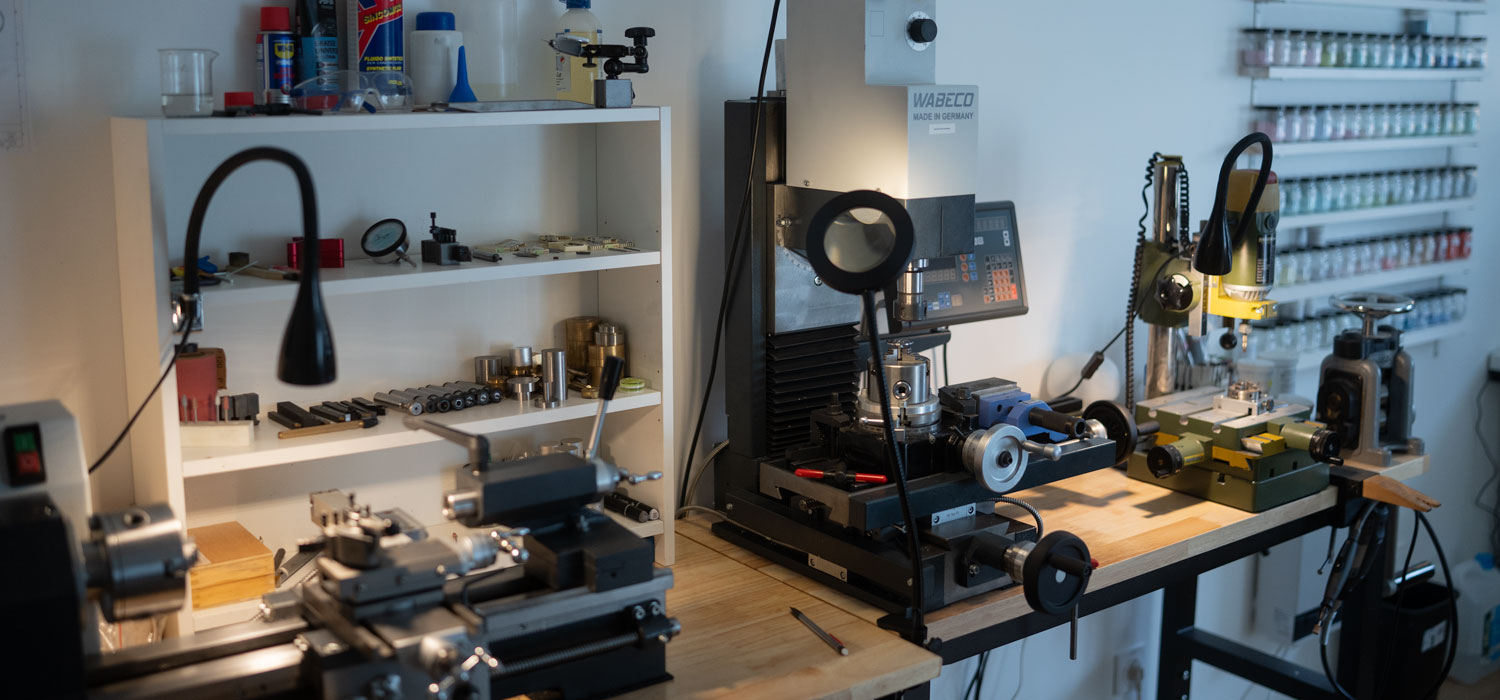
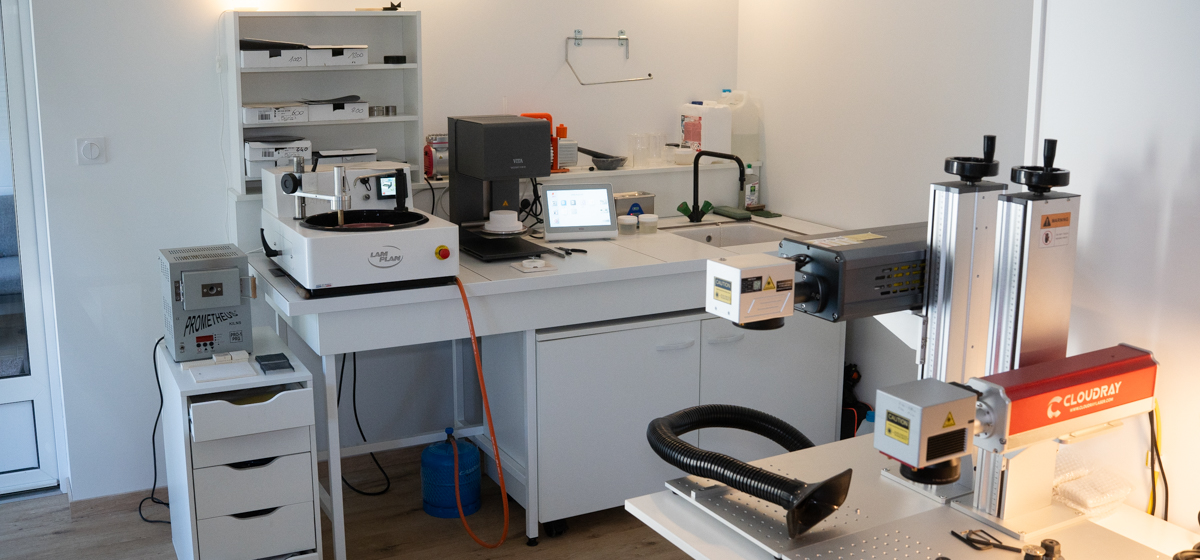
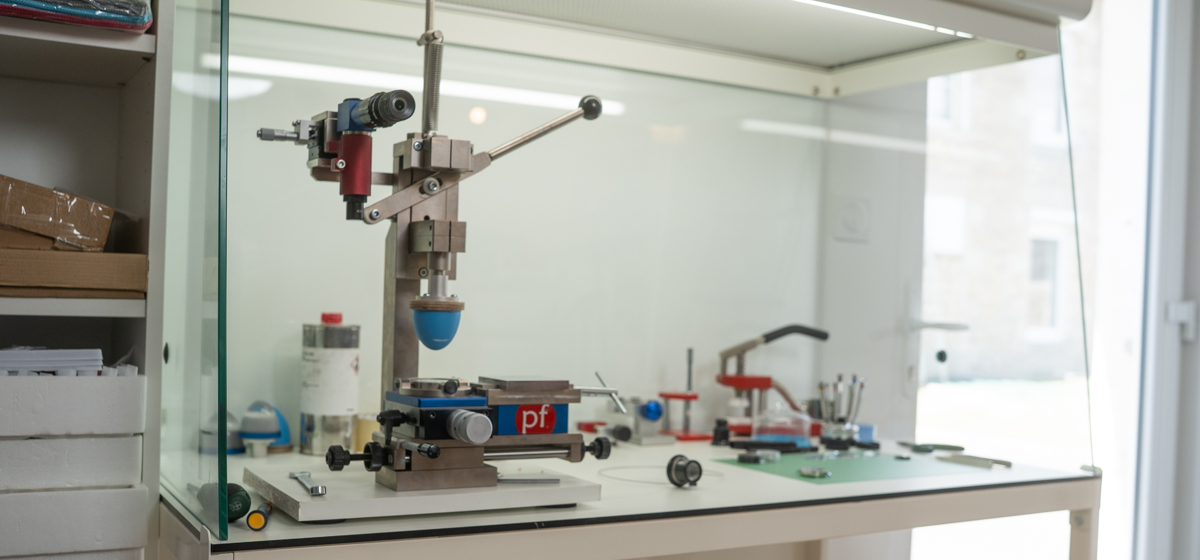
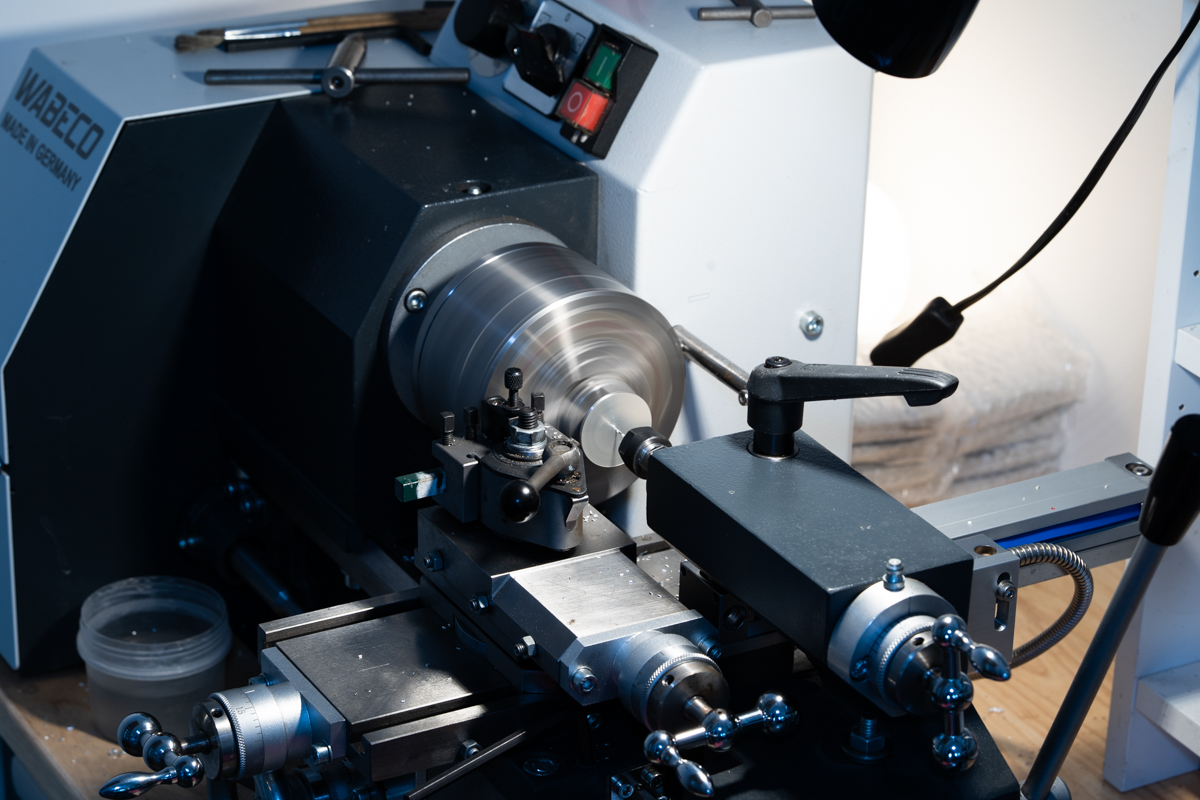
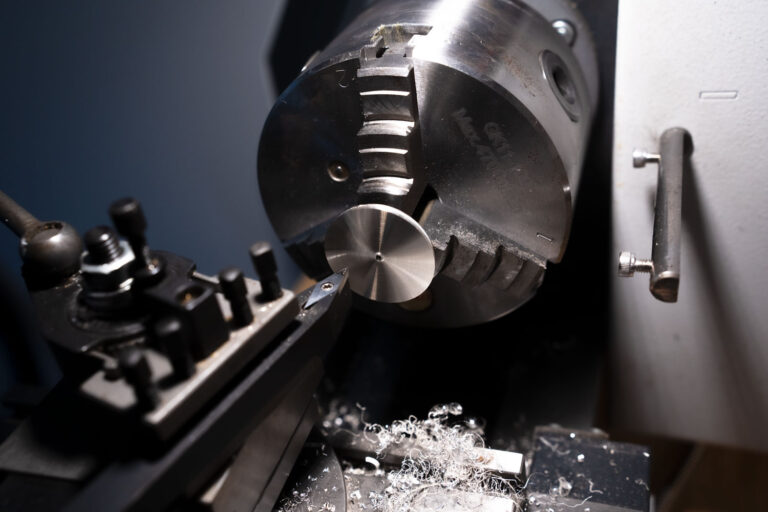
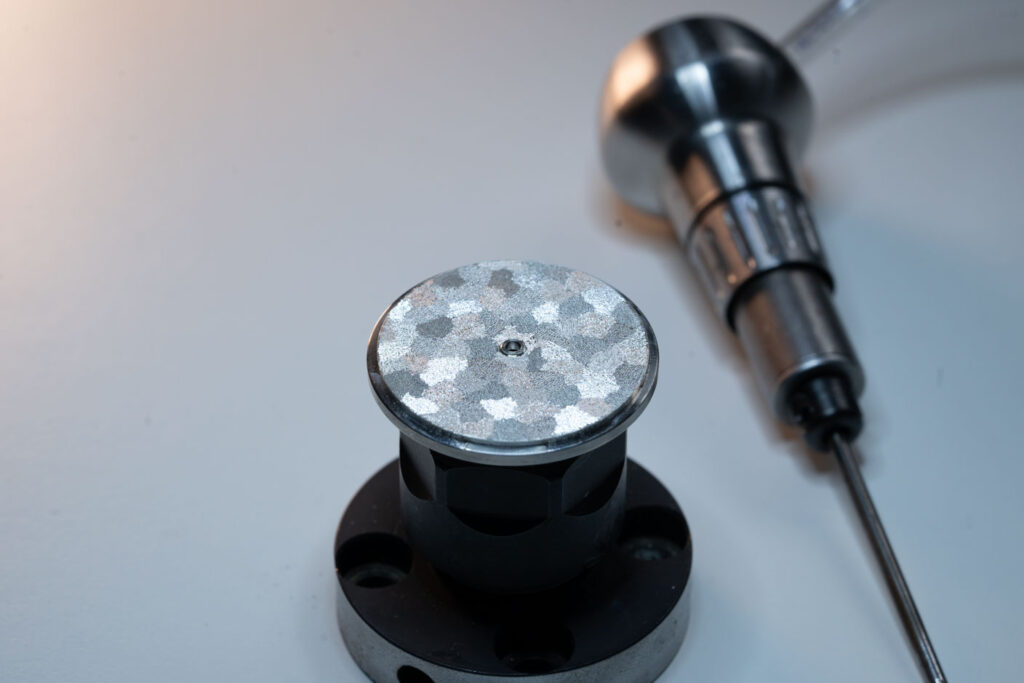
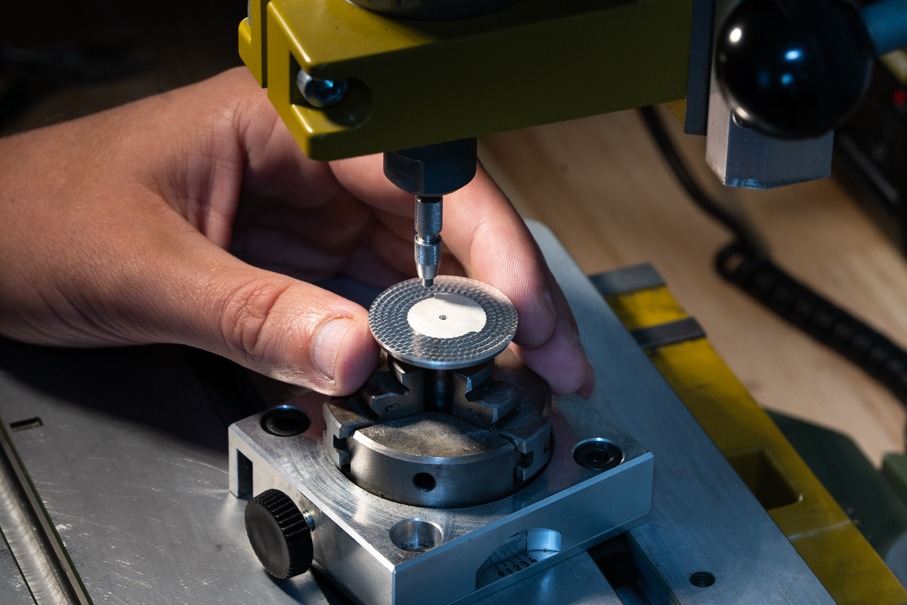
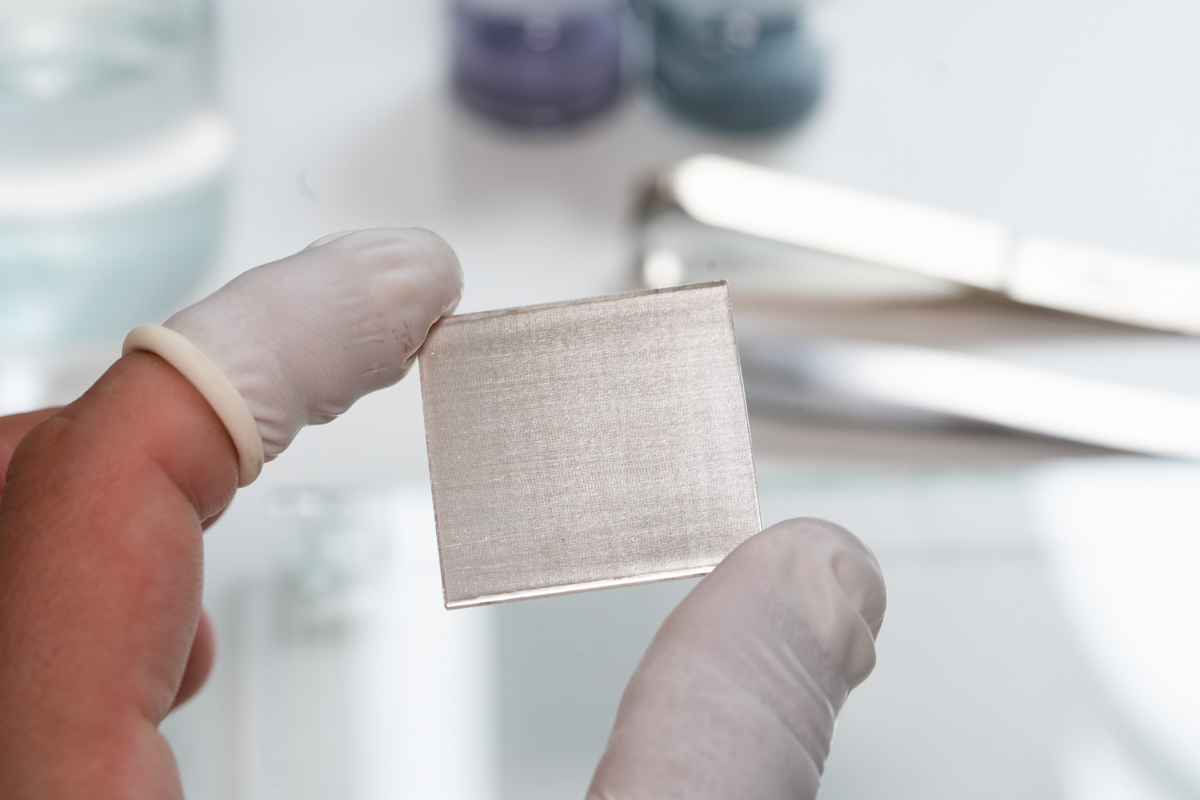
In my workshop, I make each dial from a sheet of pure silver. Machining, decoration, enamelling, polishing and pad printing: I carry out every stage myself, through to assembling the watch.
The photographs below show my tools and the work involved.
Machining
Using a metal lathe and a milling machine, I shape each dial to the required dimensions. The malleability of pure silver makes machining particularly delicate: the aim is a flawless, mirror-like surface while preserving the shape of the piece.
Decoration
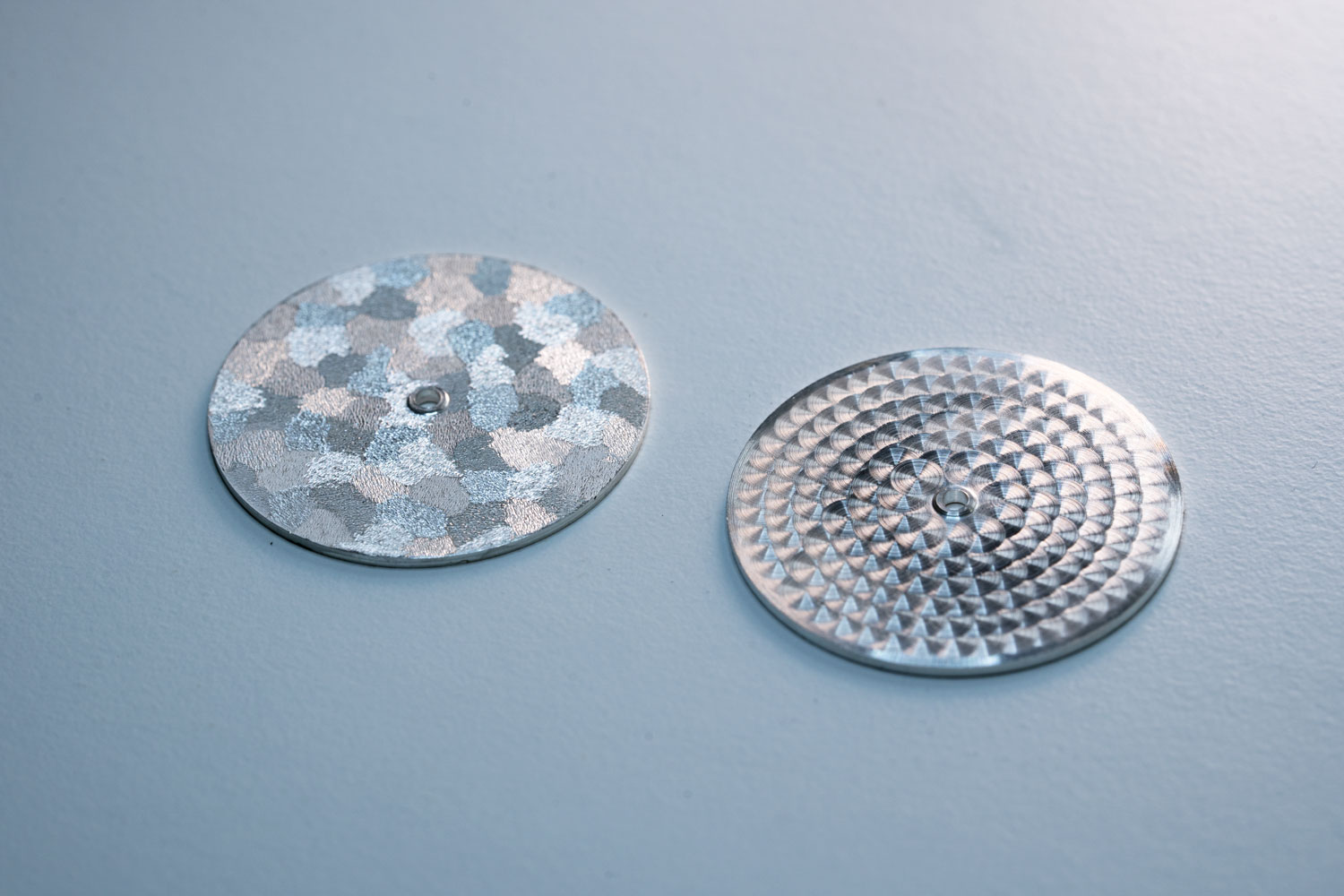
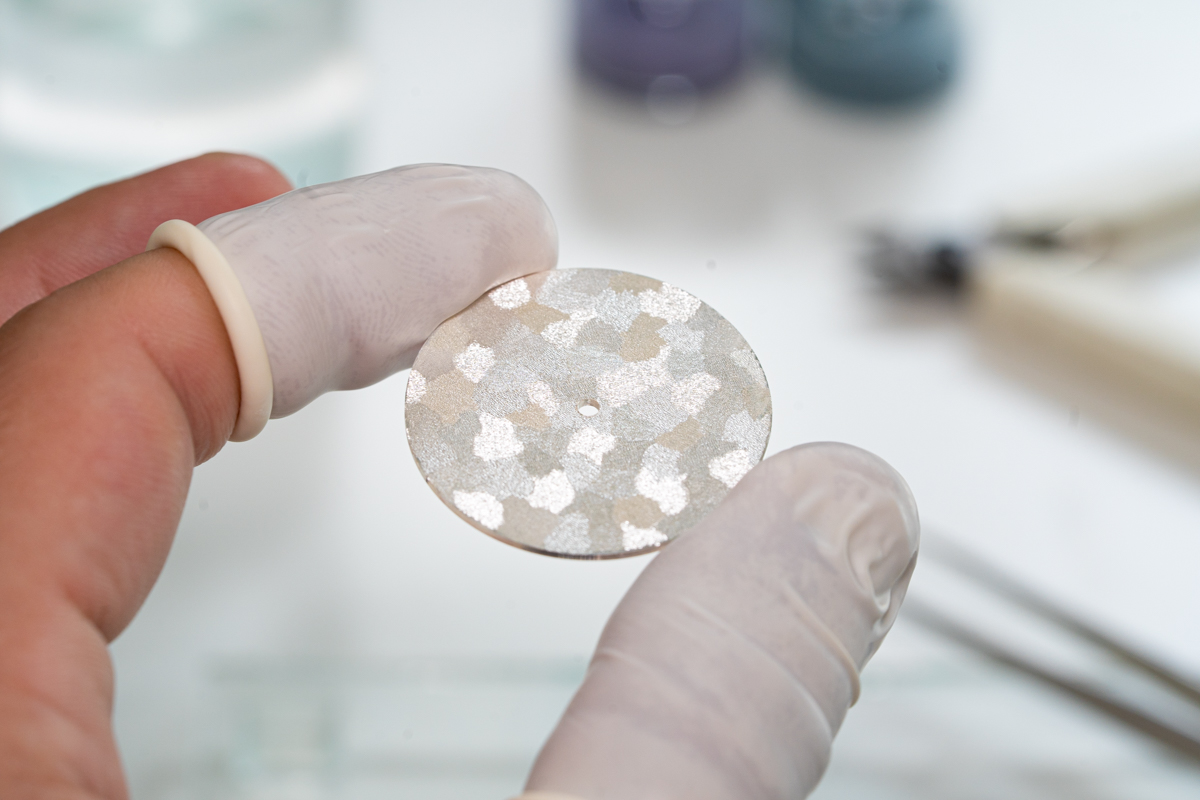
Depending on the model, I decorate the silver by hand engraving, perlage or crystallisation. These patterns remain visible beneath the enamel and give the dial its distinctive reflections.
Enamelling
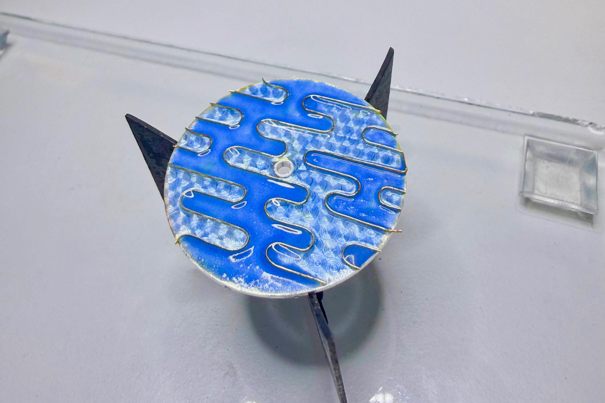
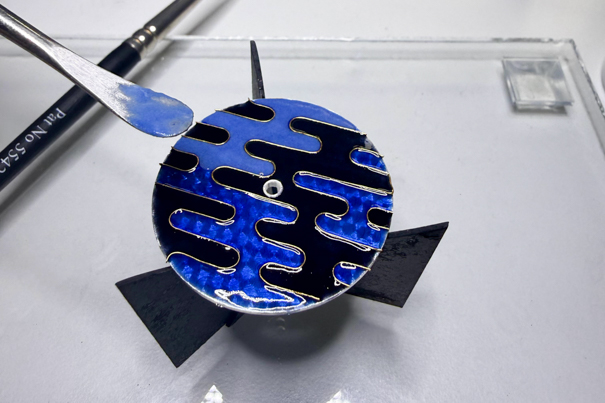
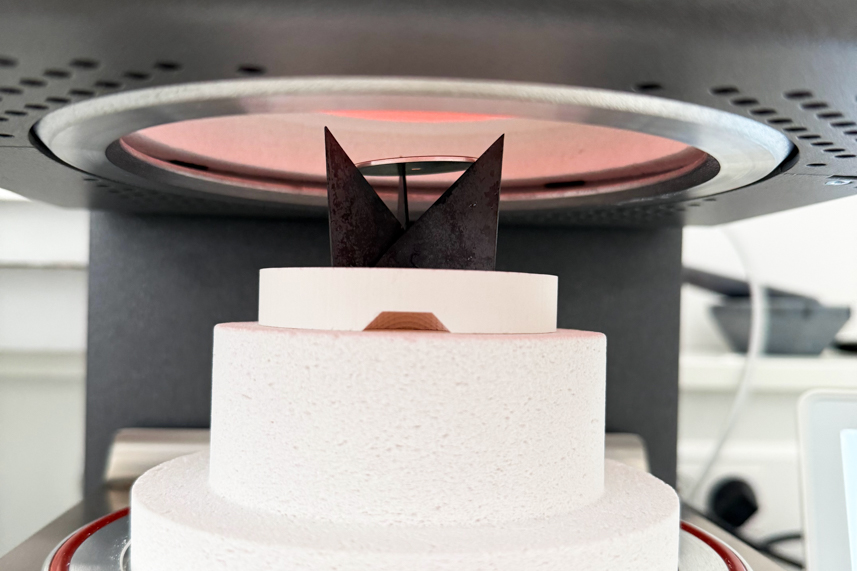
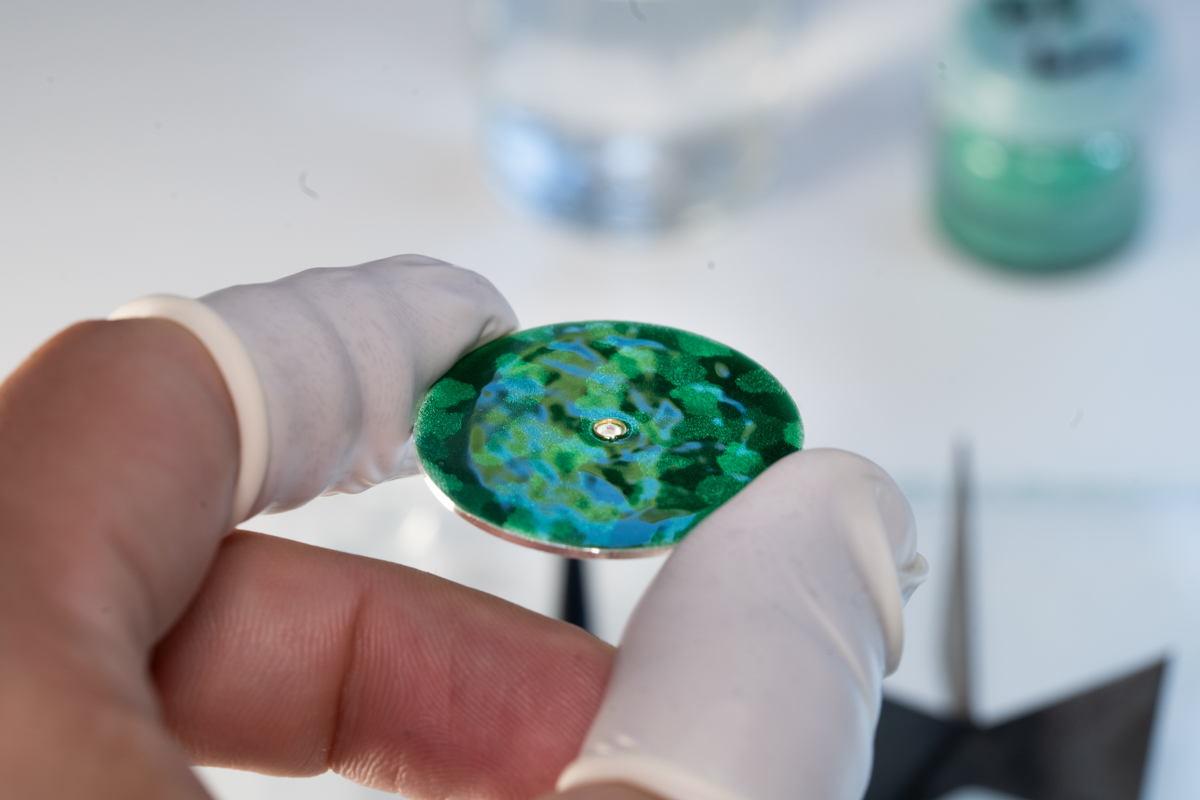
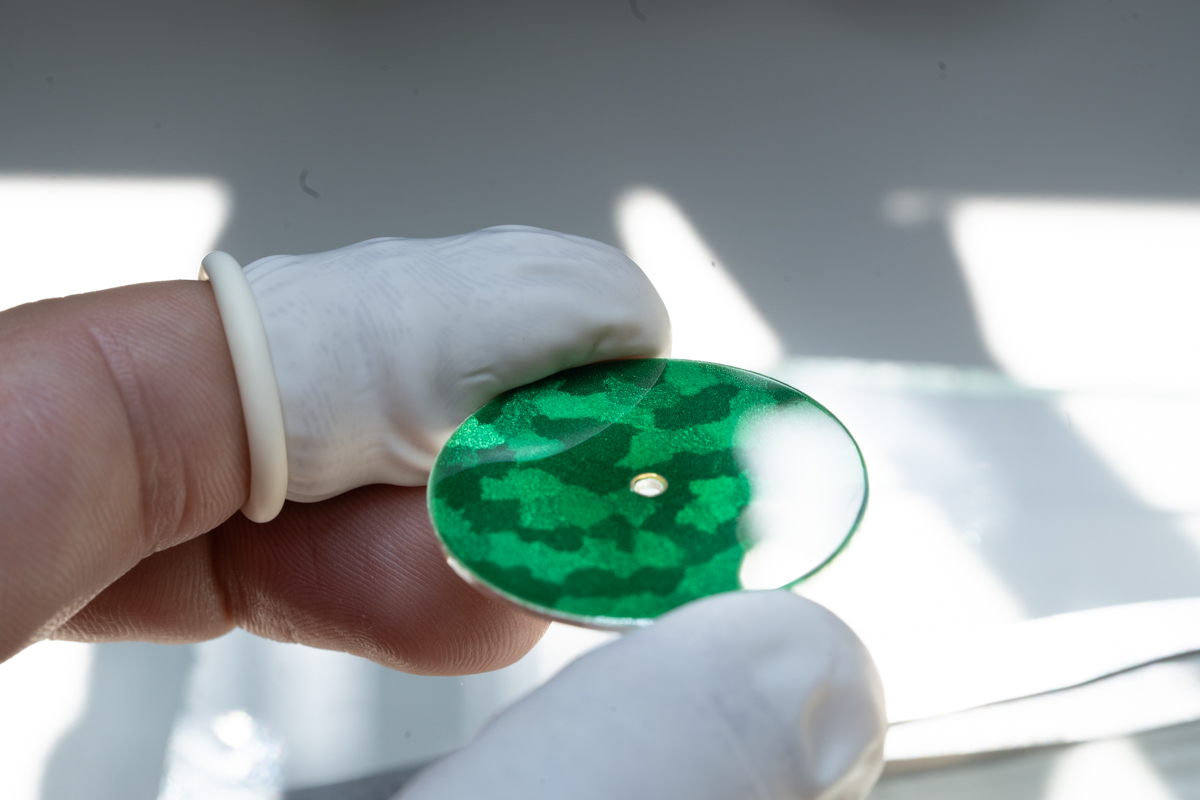
I grind the enamel, then wash it several times before applying it to the dial. Around five layers are needed, each followed by firing in a kiln at 750 °C.
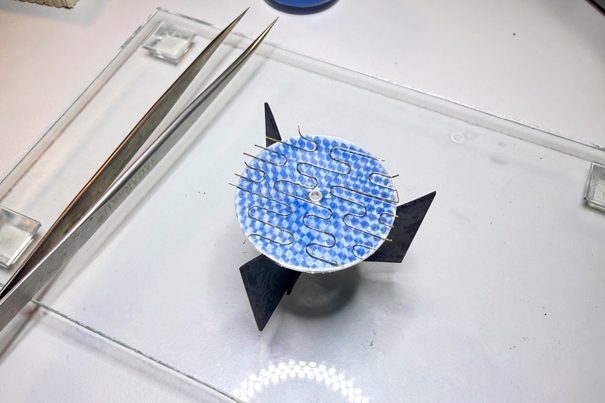
For cloisonné, I outline the design with 24-carat gold wire, which becomes embedded in the enamel during the first firing. I then fill the enclosed spaces with enamels of different colours to compose the scene.
Polishing
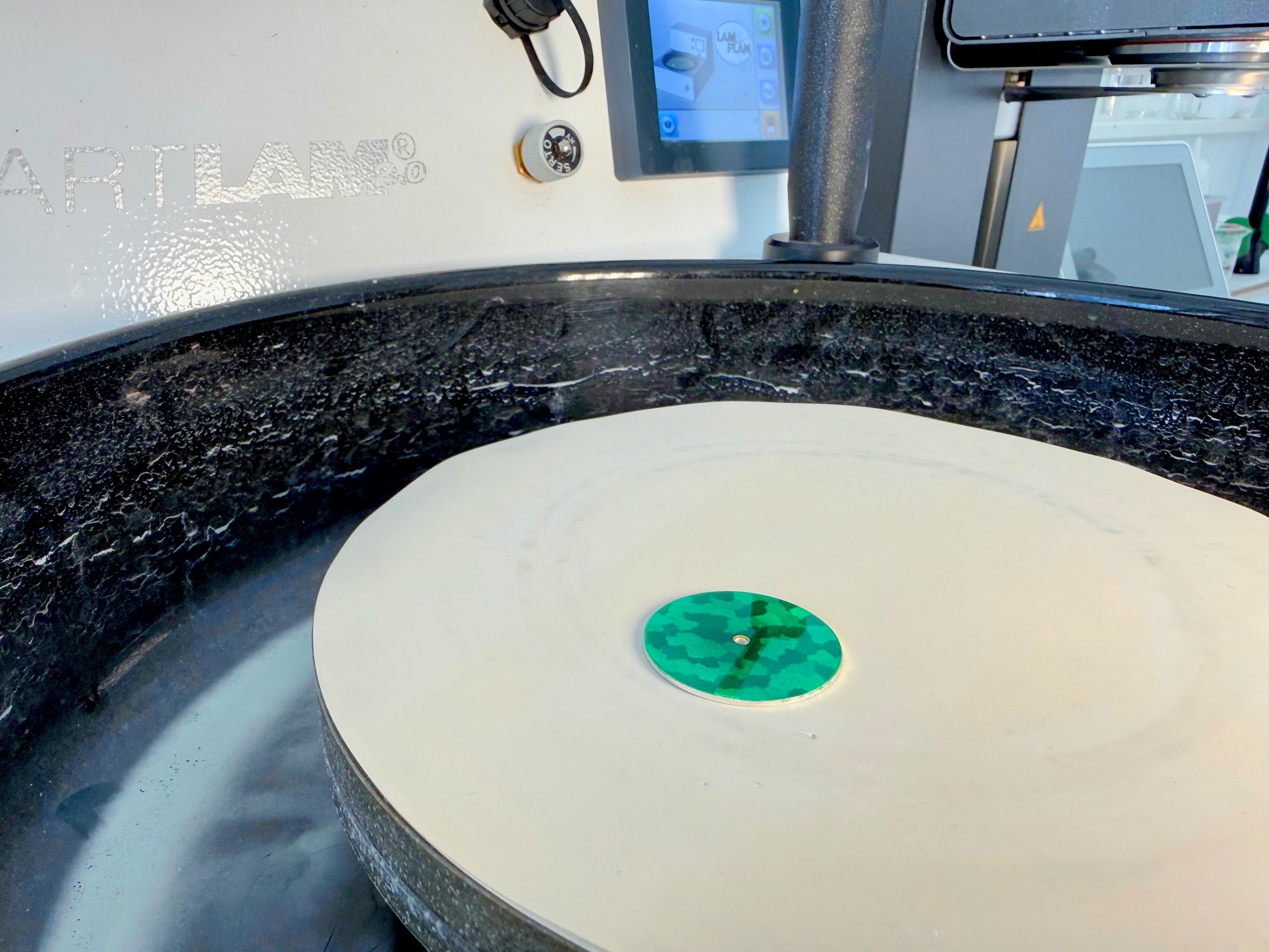
After the final firing, I polish the enamel using silicon carbide discs and diamond discs. This slow, meticulous work improves its transparency and brings out its lustre.
Pad Printing
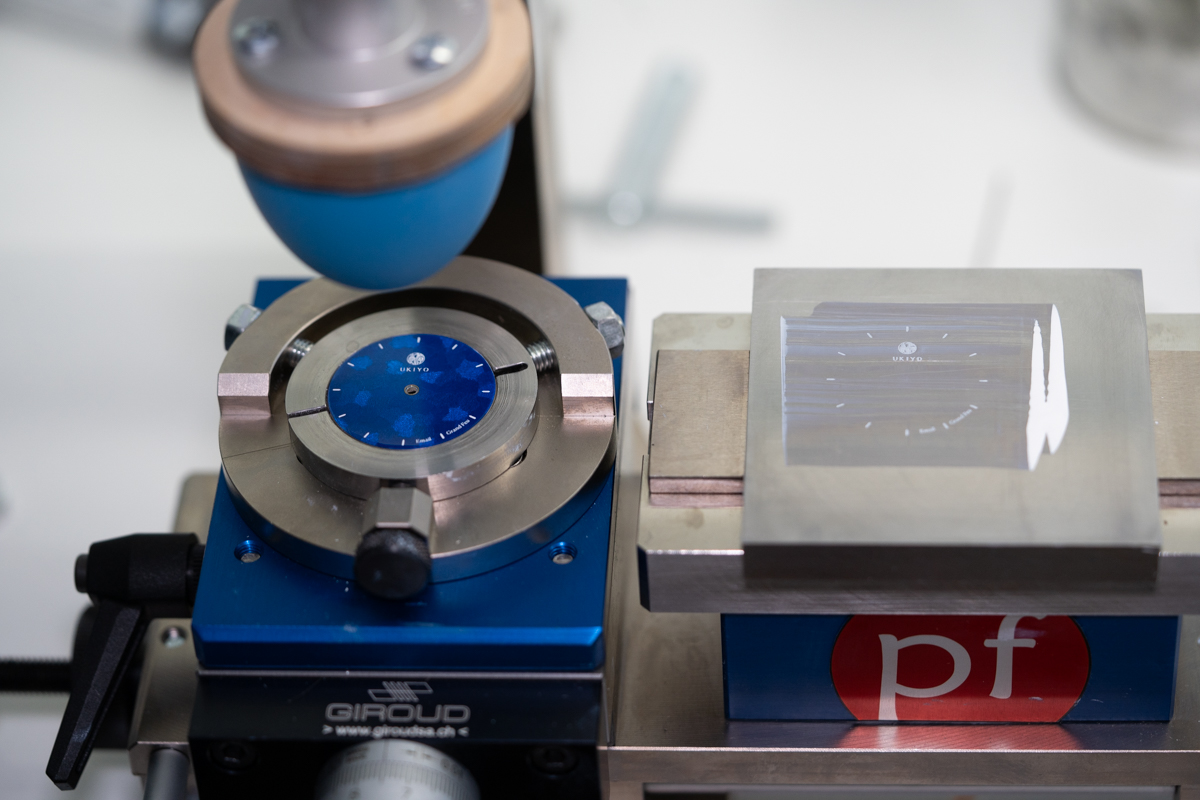
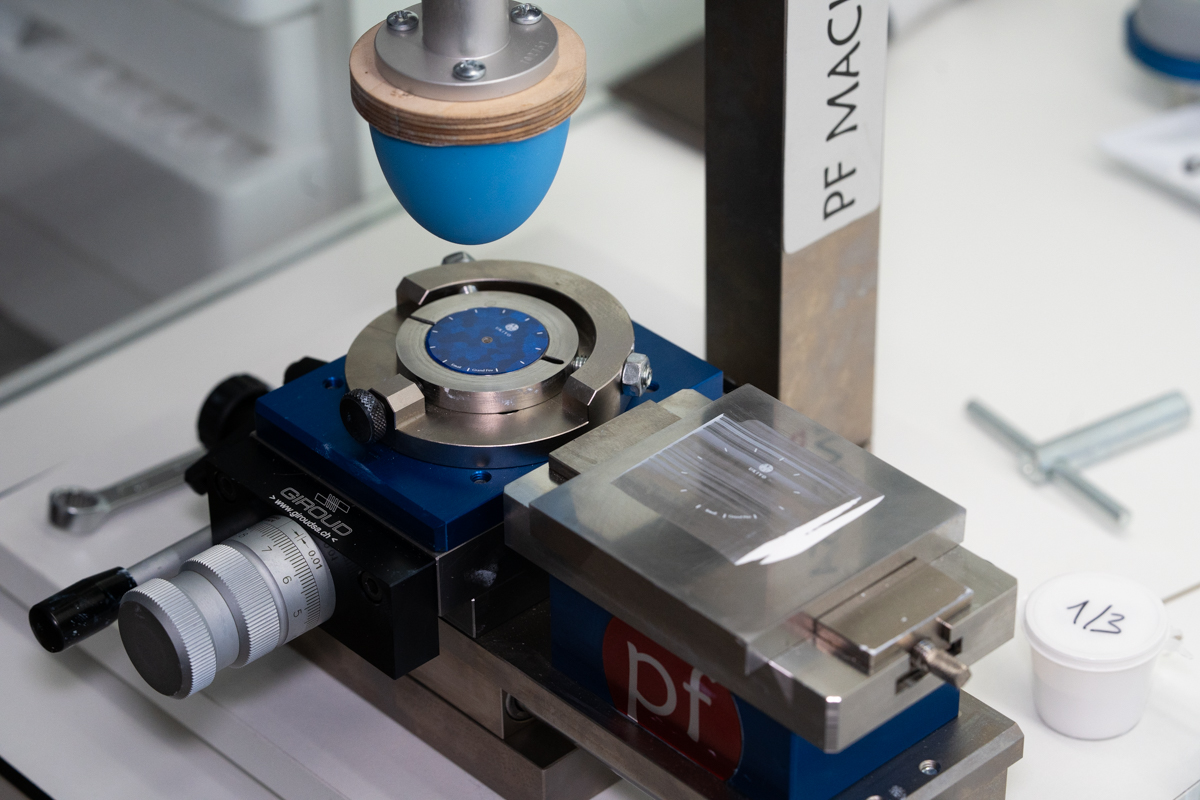
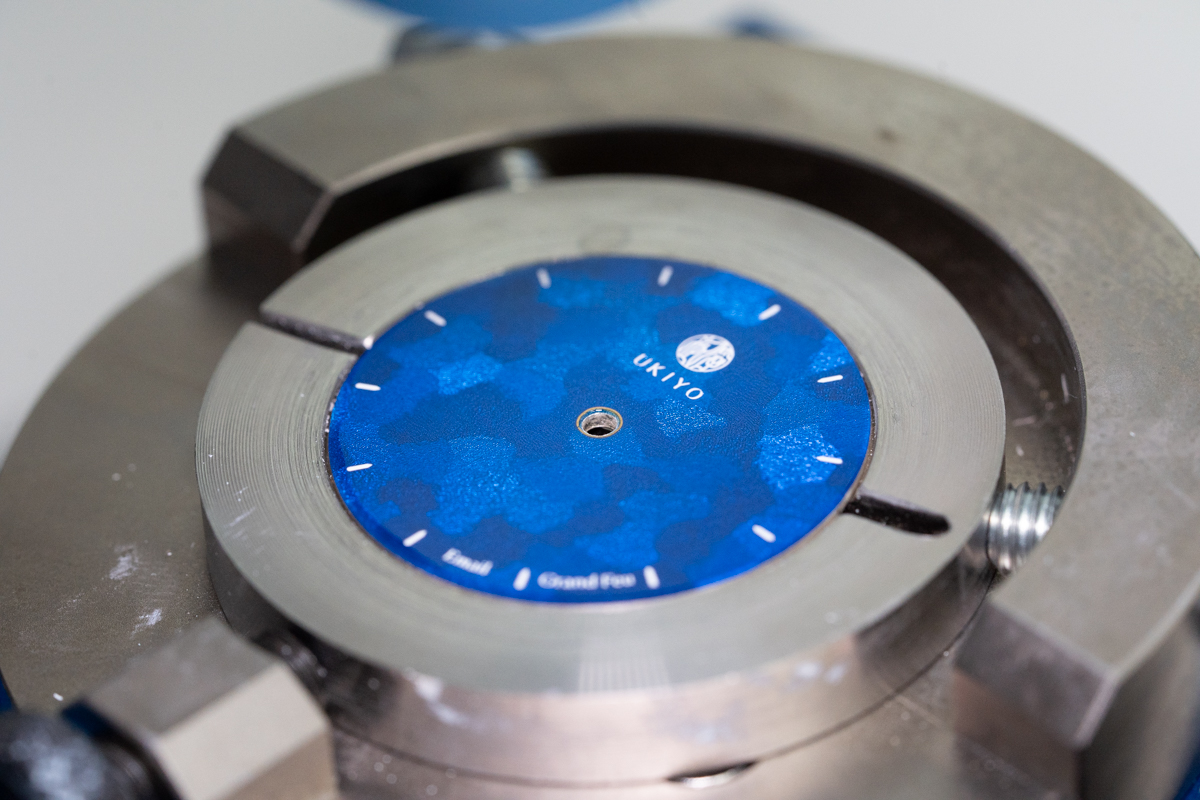
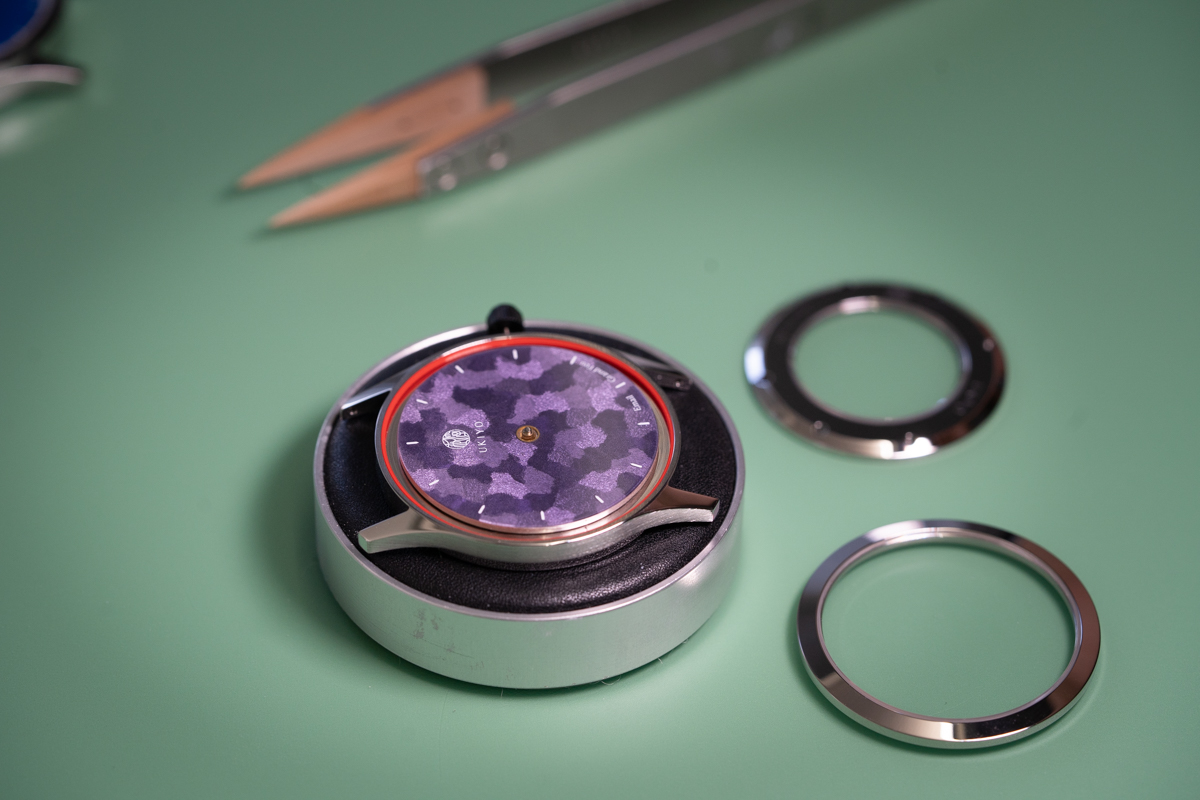
Pad printing transfers the inscriptions onto the dial. A flexible silicone pad picks up ink from an engraved plate, then transfers it onto the enamel.
The hour markers, logo and inscriptions are applied to the dial in this way, as shown here on blue enamel.
From Silver Sheet to Finished Dial
Case Finishing and Assembly
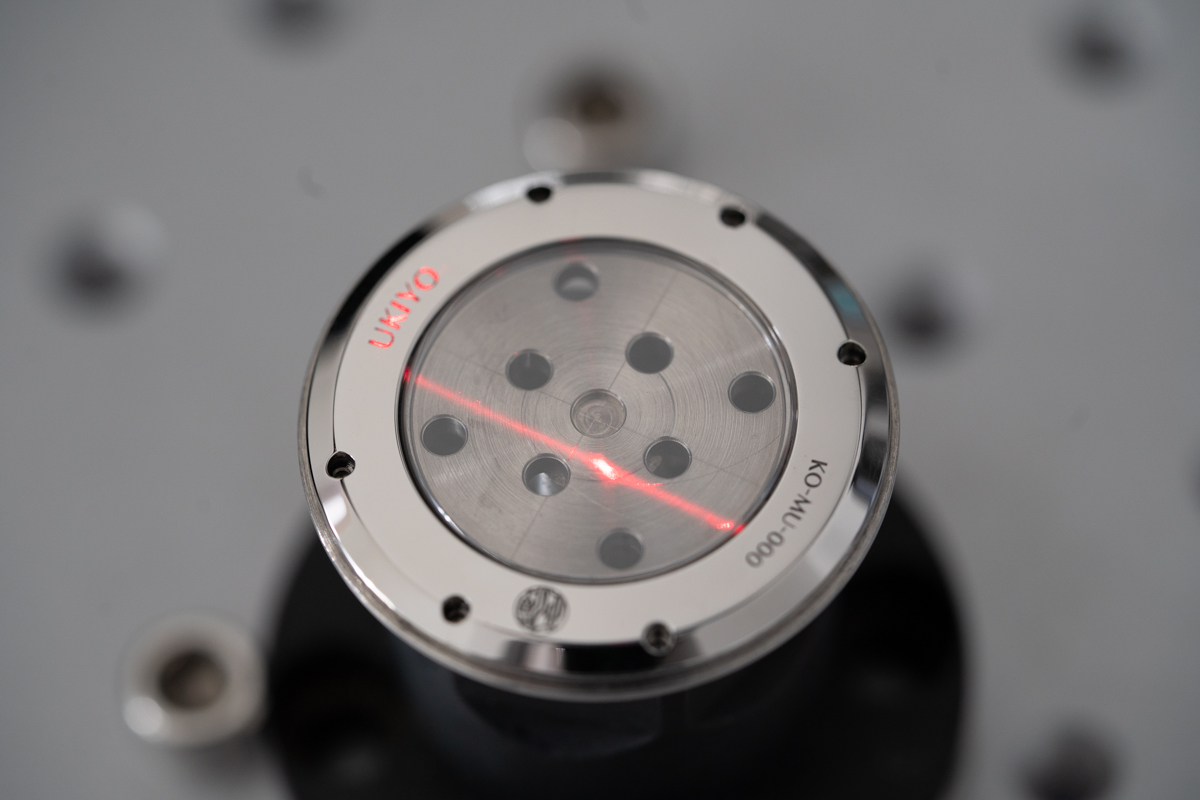
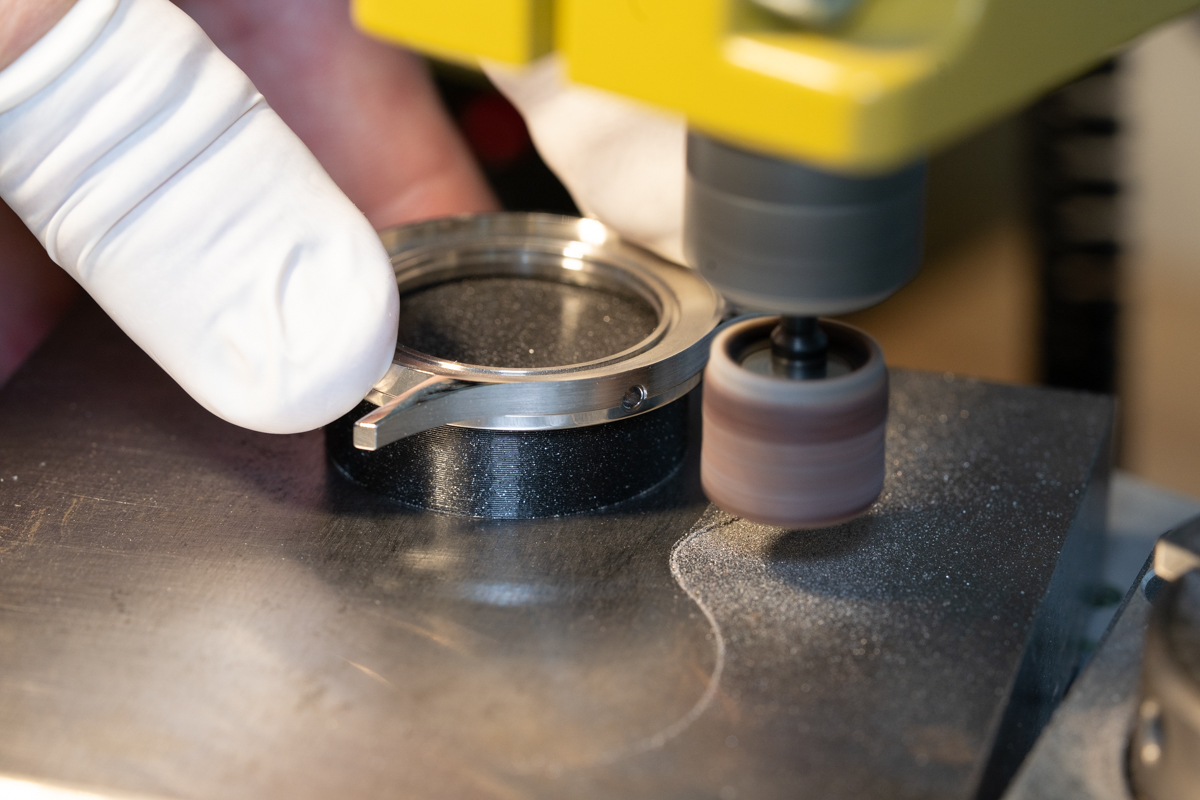
Before assembly, the sides of the case are brushed, then the case is polished. The case back is laser-engraved with the serial number and logos.
I then check the watch’s operation, accuracy and water resistance before carrying out a final inspection of all the finishes.